


Featured on


Smart Posture Corrector
Smart Posture Corrector
Couldn't load pickup availability
- American express payment method
- Apple pay payment method
- Diners club payment method
- Discover payment method
- Google pay payment method
- Master payment method
- Paypal payment method
- Shopify pay payment method
- Visa payment method


Don't let it become your new normal
-

Neck Pain
Forward-head posture puts constant strain on the neck, often leading to tightness, discomfort, and recurring tension headaches.
-

Rounded Shoulders
Over time, your shoulders begin sitting forward, making your body feel tighter, heavier, and less open.
-

Back Discomfort
A collapsed sitting position increases stress through the spine, especially after long workdays or screen-heavy routines.
-

Breathing Restriction
Poor posture can close the chest and make full, relaxed breathing feel harder than it should.


What 4,000+ Happy Customers Are Saying
-

Amy S.
Can't believe i'm saying it but after a few weeks i've been able to build up the habit and now don't even need the trueform corrector anymore.
-

Amy S.
Can't believe i'm saying it but after a few weeks i've been able to build up the habit and now don't even need the trueform corrector anymore.
-
Amy S.
Can't believe i'm saying it but after a few weeks i've been able to build up the habit and now don't even need the trueform corrector anymore.
-
Heading
Share positive thoughts and feedback from your customer..


Recommended by Experts
-

"Posture isn’t fixed by forcing the body into position. Real improvement comes from awareness, repetition, and retraining the habit over time."
-

“Awareness changes posture faster than force. The moment you feel the vibration, you reset. Over time, that repetition becomes a habit."
-

“The goal isn’t to force your body into place, it’s to help you notice when your posture starts to slip. TrueForm does exactly that with a simple vibration reminder."


Frequently asked questions
Does the smart corrector actually work?
Does the smart corrector actually work?
TrueForm is designed to help you build posture awareness.
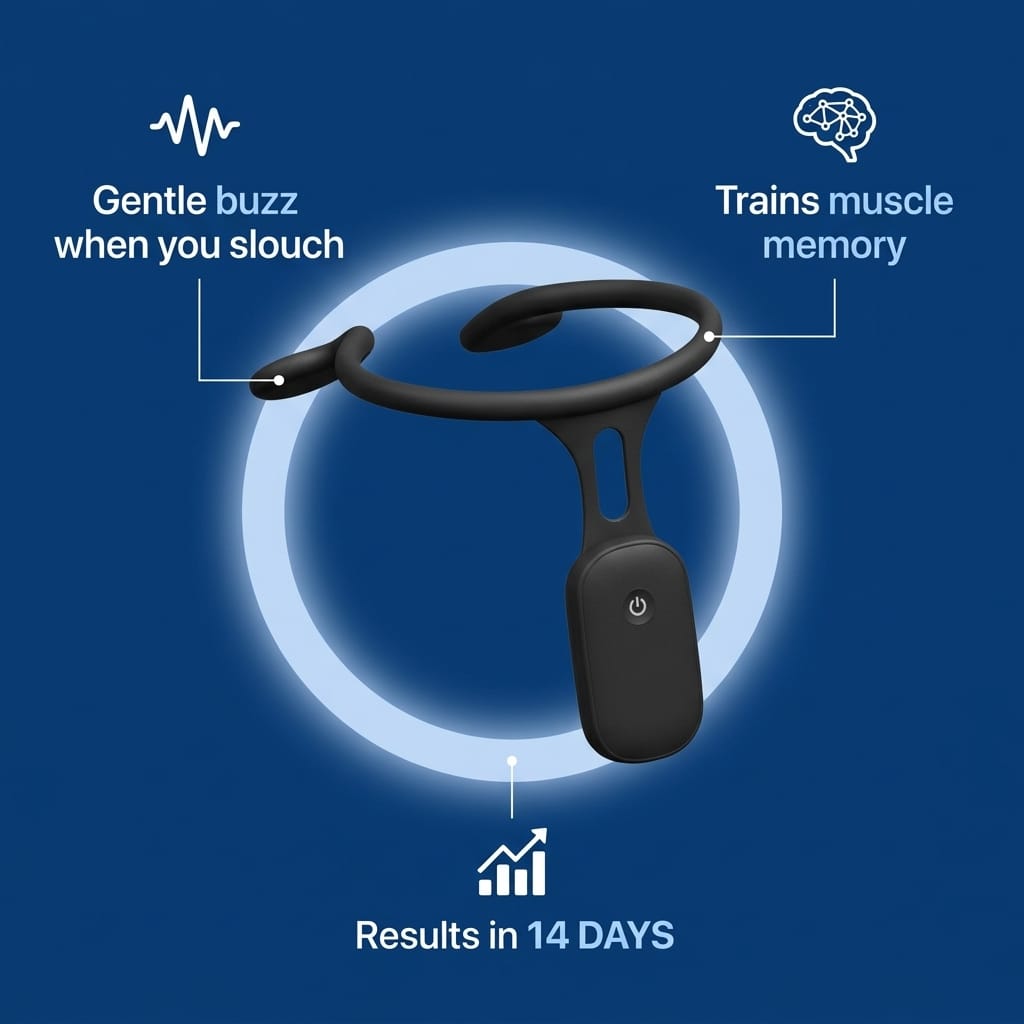
That matters because most people don’t slouch on purpose, they do it unconsciously, especially while working, driving, scrolling, or sitting for long periods. TrueForm gently vibrates when you start to collapse forward, so you notice it and correct it in the moment.
That’s the key difference: it’s not doing the work for you. It’s helping you catch the habit while it’s happening.
Like any training tool, results depend on consistency. The people most likely to benefit are the ones who use it regularly and treat it as a posture-training habit, not a magic fix.
How is this different from a normal posture brace?
How is this different from a normal posture brace?
Traditional posture braces are built to hold your body in a position.
TrueForm is built to train you to recognise bad posture and correct it yourself.
A brace can create external support. But support is not the same as habit change. TrueForm uses vibration reminders to bring your attention back to your posture, so you actively reset instead of being passively pulled into place.
That makes it a better fit for people who want to improve awareness and build better everyday posture habits, not rely on rigid support all day.
Will this make my muscles weak?
Will this make my muscles weak?
That’s one of the biggest concerns people raise, and it’s exactly why TrueForm is designed as a reminder device, not a strap that physically holds you upright.
The goal is not to replace your muscles. The goal is to help you notice slouching and engage better posture yourself.
TrueForm works best when used as part of an active routine, meaning movement, stretching, mobility, and paying attention to how you sit and stand throughout the day. It’s there to cue awareness, not create dependence.
Do I have to wear it all day?
Do I have to wear it all day?
No - and for most people, that’s not even the best way to use it.
TrueForm is designed more like a training tool than an all-day wearable. Many people prefer using it during the times they’re most likely to slouch:
- while working at a desk
- during long study sessions
- when driving
- while gaming or scrolling
- during focused sitting blocks
The real value comes from consistent use in the moments your bad posture habits show up most.
How long does it take to notice a difference?
How long does it take to notice a difference?
That depends on how often you use it and how deeply ingrained your posture habits are.
Some people notice a difference quickly in terms of awareness, they become more conscious of how often they slouch within the first few uses. For others, it takes more repetition before better posture starts feeling more natural.
The important thing is to think about TrueForm as training, not instant correction. The goal is to build a new pattern over time through repetition.
Will it help with neck, shoulder, and back tension?
Will it help with neck, shoulder, and back tension?
TrueForm is not a medical treatment, and it shouldn’t be presented as one.
What it is designed to do is help reduce the repeated slouching and collapsed sitting habits that often contribute to everyday tension and strain. Many people spend hours with their head forward, shoulders rounded, and chest collapsed, and that can add up over time.
By helping you notice those moments sooner, TrueForm supports better posture habits that may help you feel less collapsed during the day.
If you have significant pain, injury, or a medical condition, it’s always best to speak with a healthcare professional.
Is it uncomfortable or hard to use?
Is it uncomfortable or hard to use?
It’s designed to be simple.
The experience should feel subtle: when you start slouching past your set posture threshold, you get a gentle vibration reminder. The point is not to annoy you - it’s to interrupt the habit and bring your attention back.